

Entries tagged "WordPress"
Mysterious WordPress Update Causes the Number of Comments Link to Include the Post Title
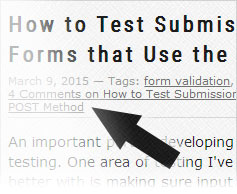
With the recent WordPress upgrade, the links that show how many comments were made to the blog posts have changed. My template was originally designed to only show the number of comments, but now it also includes the post title. Let's take a quick look at what's causing the issue and what can be done in response. [Continue reading]
Lessons Learned: Outputting Shortcode and Plugin Results
If you look closely at the documentation for WordPress Shortcodes, there is a specific way to output content to the screen. Of course, this is a part of the documentation I skipped while developing my first plugin which lead to some baffling results. To help save you time, I wanted to share one last lesson learned from writing my plugin. [Continue reading]
Lessons Learned: How Not to Name Shortcode Attributes in WordPress
Developing my first WordPress plugin provided me with many learning opportunities. We already talked about the quicker way of uploading plugin files. In this post, I wanted to share the problem I had with shortcode arguments. Hopefully it will help you avoid the same issue. [Continue reading]
Lessons Learned: Quick Way to Upload Custom WordPress Plugins
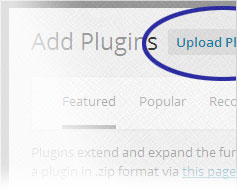
While writing my first WordPress plugin, there is one thing I wish I would have known sooner. Much of the early development time was spent zipping, uploading, activating, and deactivating files. There was a lot of monotonous work that is easily avoided. Let's take at quick look at how. [Continue reading]
My First WordPress Plugin: Generates a Bulleted List of Clickable Blog Post Titles

I recently helped with a redesign that involved building a website with an out-of-the-box WordPress theme. The theme met our needs for the most part, but we were looking for something to dynamically generate an FAQ page from blog posts tagged with "FAQ". After trying some third-party plugins which didn't quite work for us and attempting to modify the theme files directly, I decided it was time to build my first WordPress plugin. [Continue reading]
Prevent Broken Links in WordPress Posts by Using Root-Relative Links
WordPress does many magical things behind the scenes. HTML tags needed to display a blog post are added for us. Posts tagged with keywords are automatically connected to other posts with the same tag. Side bar widgets generate lists of recent posts, most used tags, etc. with no intervention from us. We just need to write the posts, add the tags, activate the widgets and WordPress does the rest. With all these automation features, I have overlooked a potential flaw in the system—they use absolute links. [Continue reading]
Thoughts from the CyberScorpion.com Redesign
It's finally done. The CyberScorpion Bytes blog has been redesigned! When switching to WordPress a few years back, a pre-made theme was chosen for the design so I could hit the ground running with the blog. It was never the plan to stick with that template. I wanted to build my own. Now that it's done, I wanted to share some thoughts. [Continue reading]
How to Disable (or Modify) the Revision History in WordPress
For some reason, WordPress maintains the revision history for posts in the same database as the live posts. The issue with having the revision posts in the database is the extra overhead. Whenever the website queries the database, it needs to work with all records—including the revisions. Of course, this will unlikely be a problem for most blogs. But for those who prefer to keep websites running as efficiently as possible, the number of revisions can be limited…or stopped altogether. [Continue reading]
Using the Date Format Chosen by the User Instead of Hard-Coding Your Own in the WordPress Theme
WordPress has a setting under the admin panel where blog owners can indicate how dates should be displayed for blog posts and comments made to the blog. The setting isn't very useful though when the date format is hard coded into the theme. Instead of making users edit the theme files, let's take advantage of the WordPress setting. [Continue reading]
Choosing the Date Format in WordPress Themes: Let’s Give Control Back to the User
So many WordPress themes have the date format hard coded into the theme files. The problem is that some users will prefer to display the date in another way. Maybe the chosen format doesn't match their organization's style guidelines or maybe the format isn't grammatically correct. Changing a hard-coded date requires users to dig through file after file to modify every instance. Plus, if the theme developer releases an update, the user may need to do it all over again. To save users the hassle, why not let them decide how the dates are displayed. There is a setting in WordPress after all. [Continue reading]


